
 Quick Answer
Deposition transcripts are created when a certified reporter captures testimony word for word on a stenotype machine, then translates those notes through CAT software into text, edits and proofreads against a synced audio backup, and certifies the final document. The result is a sworn, verbatim record ready for filing and trial.
Why This Matters
Most attorneys see the transcript as a finished PDF and never think about how it got there. But the production process is exactly where accuracy is won or lost. Knowing how the sausage is made helps you set realistic turnaround expectations, request the right format, and understand why a rushed or under-resourced reporter produces a weaker record.
For a litigation team, the practical payoff is control: better instructions to the reporter, smarter deadline planning, and fewer surprises when the certified transcript production lands.
The Transcript Creation Process, Step by Step
1. Verbatim Capture at the Deposition
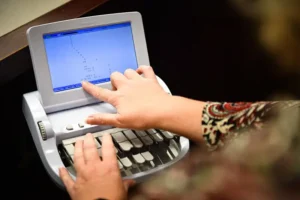
The reporter writes phonetic shorthand on a stenotype machine, pressing combinations of keys that represent sounds rather than letters. A skilled reporter keeps pace with fast questioning, capturing every word in real time. This live capture is the foundation of all court reporting and the single most important step.
2. Simultaneous Audio Backup
Alongside the steno notes, a synchronized audio recording runs as a safety net. This is not the record itself; it is a reference the reporter uses later to confirm a mumbled word or an overlapping exchange.
3. Translation Through CAT Software
The reporter’s shorthand runs through Computer-Aided Transcription software, which converts the phonetic strokes into English using a personal dictionary the reporter has built over years. This is why two reporters are not interchangeable: the dictionary and the training behind it directly affect accuracy.
4. Editing and Scoping
The raw translation is then edited, sometimes by the reporter and sometimes with a scopist, who checks the text against the audio, fixes untranslated strokes, applies correct punctuation, and confirms speaker labels. Punctuation alone can change the meaning of testimony, so this step carries real weight.
5. Proofreading
A final read confirms spellings of names, technical terms, and exhibit references, and catches anything the earlier passes missed. This is where a transcript goes from accurate to airtight.
6. Certification and Delivery
The reporter signs a certification attesting that the transcript is a true and accurate record. It is then delivered in the formats counsel needs, including PDF, condensed, word-indexed, and electronic versions for trial software.
The Technology Behind the Transcript
Modern transcript creation leans on several tools working together:
- Stenotype and CAT software for capture and translation.
- Custom dictionaries that grow with each case and specialty.
- Synchronized audio and video for verification and impeachment value.
- Realtime streaming, which lets attorneys read testimony live through realtime internet streaming while the reporter writes.
Rough Draft vs Certified Final Transcript
You do not always have to wait for the final document. Understanding the two products helps you choose.
A rough draft is the right call when:
- You need to prepare for the next day’s testimony immediately.
- You want to identify key admissions before the certified version is ready.
- Speed matters more than polish, and you understand it is uncertified and may contain untranslated strokes.
The certified final transcript is required when:
- You are filing with the court or serving opposing counsel.
- The testimony will be used at trial or in a motion.
- Accuracy must be attested and defensible.
For tight timelines, expedites and rough drafts bridge the gap between the deposition and the certified record. What happens if you skip this distinction: relying on an uncertified rough draft as if it were final risks quoting language that changes during editing.
Common Mistakes That Delay or Degrade a Transcript
- Crosstalk during the deposition. Overlapping speech forces the reporter to reconstruct from audio, slowing production and risking gaps.
- Unspelled names and terms. Every unspelled proper noun becomes a research task or an errata-sheet correction later.
- Requesting an expedite at the last minute. Rush production is possible, but flagging it upfront produces a cleaner, faster result.
- Not specifying delivery format. Receiving a format your trial software cannot ingest costs a conversion round.
- Choosing the cheapest reporter for a technical case. A specialty deposition needs a reporter whose dictionary already includes the relevant terminology.
Why Choose the Hanna Reporting Team
Experience: Over three decades of transcript production means our reporters have built deep, specialty-specific dictionaries, from complex commercial disputes to medical and technical testimony. That accumulated craft is what separates an accurate transcript from a merely passable one.
Reliability: We treat turnaround as a promise, not an estimate. Standard and expedited timelines are quoted clearly and met, so your filing calendar holds.
Quality and Technology: We deliver the most comprehensive multi-format final documentation in the industry, pairing certified transcripts with synchronized audio, realtime feeds, and trial-ready electronic formats. The technology serves the accuracy, not the other way around.
Service Area and Coverage: Based in Houston and licensed throughout Texas, we produce certified transcripts for proceedings across the Greater Houston area and coordinate nationwide, with consistent quality whether the deposition was in person or remote. Our certified realtime reporters bring that standard to live proceedings as well.
Frequently Asked Questions
How long does it take to get a deposition transcript?
Standard turnaround typically runs several business days, depending on length and complexity. Expedited, daily, and same-day options exist when a deadline demands it; flag the timeline when you book so production can be planned.
Is a rough draft the same as the official transcript?
No. A rough draft is an uncertified, unedited version useful for fast review. It may contain untranslated strokes and is not for filing. The certified final transcript is the edited, proofread, attested record.
Why do transcripts cost what they do?
Pricing reflects the reporter’s live skill, the editing and proofreading labor, certification, and the delivery formats requested. Specialty terminology and expedited timelines add to that work, which is why quotes vary by case.
Can I get the transcript synchronized with video?
Yes. When a legal videographer captures the proceeding, the video can be synchronized to the transcript so a specific line of testimony links to the exact moment on video, which is valuable for impeachment and trial presentation.
Get a Transcript Built to Hold Up
A deposition transcript is only as strong as the process behind it. From the first stenotype stroke to the final certification, every step protects the record your case depends on. Schedule a certified court reporter with Hanna & Hanna and get a transcript built to hold up under scrutiny.